Analysis
PCI DSS: why CEMAC banks and payment switches can no longer ignore it
Interoperable cards, online payments, mobile money connections: in Central Africa, payment card data flows through a growing number of systems. The international PCI DSS standard sets the rules for protecting it. Drawing on the expertise of its partner Techso Group, an accredited assessor, GSS supports banks and payment switches in the CEMAC zone towards compliance.
YOUSSOUF Abdoulaye Acyl, Public Relations and Communication Manager, GSS Published on 5 min read
What is PCI DSS?
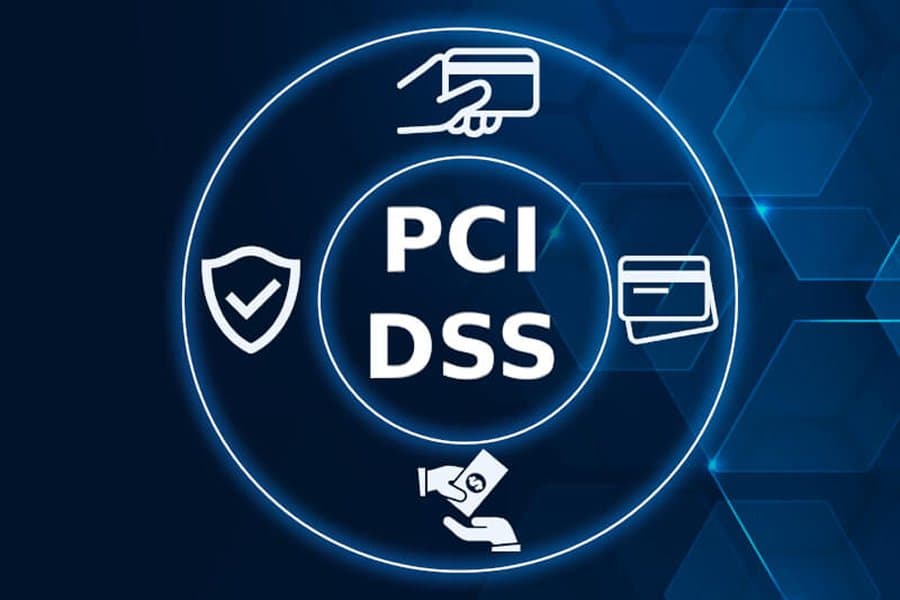
PCI DSS (Payment Card Industry Data Security Standard) is the security standard for payment card data. It is published by the PCI Security Standards Council, founded by the major international card networks. It applies to any organisation that stores, processes or transmits card data: issuing and acquiring banks, payment processors, card switches, merchants and technical service providers.
Its requirements cover the entire chain: network security, protection of stored data, encryption of transmissions, vulnerability management, access control, logging, regular testing and security policy.
A new version now fully in force
Version 4.0, published in March 2022, is the first major revision of the standard in more than ten years. It introduced 64 new requirements, 51 of which were presented as best practices until 31 March 2025.
Since that date, all these requirements are mandatory, and version 4.0.1 is the only one in force. Among the most significant changes:
- multi-factor authentication for all access to the cardholder data environment, for staff and service providers alike;
- stronger passwords, with a minimum of 12 characters;
- a “customised approach” and targeted risk analyses, which allow more flexibility in choosing controls.
Why CEMAC is directly concerned
Regional payment interoperability. The growth of interbank payments in the CEMAC zone connects many players. A weakness at a single participant can expose the whole ecosystem.
International card networks. Banks that issue or accept cards from the major international networks must comply with PCI DSS and require it from their service providers.
Fraud and reputation. A card data breach leads to financial losses, card reissuance costs and a lasting loss of customer trust.
Alignment with other requirements. Regional regulators’ expectations on operational and IT risk largely overlap with PCI DSS. A well-run PCI DSS programme therefore strengthens the institution’s overall security.
Steps towards compliance
- Define the scope. Identify exactly where card data is stored, processed or transmitted. Reducing this scope is often the first cost-saving lever.
- Assess the current state. Compare current practices with the requirements of version 4.0.1.
- Close the gaps. Implement the missing technical and organisational measures.
- Validate compliance. Depending on transaction volume and the organisation’s role, through a self-assessment questionnaire or an audit by a Qualified Security Assessor (QSA).
- Maintain over time. Compliance is renewed every year and monitored continuously.
Techso Group, an accredited assessor
Techso Group is accredited as a PCI QSA by the PCI Security Standards Council, which authorises it to conduct PCI DSS certification audits. It also holds the PASSI qualification issued by Morocco’s DGSSI and ISO 27001, ISO 22301 and ISO 27701 certifications.
The GSS approach
Drawing on its knowledge of Central Africa’s payment ecosystem, GSS supports institutions at every stage, relying on Techso Group’s expertise:
- scoping and scope reduction;
- gap assessment and remediation plan;
- integration of the required security solutions;
- preparation for the compliance audit.
Conclusion
PCI DSS is no longer optional for payment players in the CEMAC zone. It is a card network requirement, a protection against fraud and a guarantee of trust for customers. It is better approached as a structured project than as a last-minute constraint.
Would your institution like to assess its position against PCI DSS v4.0.1? GSS experts offer an initial assessment. Contact us.